
Thermostat Repair in the USA
A thermostat acts as the command center for your entire heating and cooling setup. It reads room temperature and tells the furnace or air conditioner when to start or stop. When this small device stops working right, your home can swing between too hot and too cold even though the main equipment itself is fine.
Our technicians at Home HVAC Systems arrive with tools to test voltage, check wire connections, and compare the thermostat reading against an accurate thermometer. They look for loose terminals, worn mercury bulbs, or failing digital sensors that cause the system to ignore your settings. Families rely on Home HVAC Systems for prompt thermostat repair attention so the USA home stays cozy always.
Common Indicators Your Thermostat Needs Attention
- Temperature in rooms stays far from the number you set on the dial or screen.
- Heating or cooling equipment turns on and off at odd times without any pattern.
- Display on the thermostat stays blank or shows error codes that do not clear.
- System runs nonstop yet indoor air never reaches a comfortable level.
- Clicking or buzzing sounds come from the thermostat wall unit when it tries to call for heat or cool.
What Technicians Measure During a Visit
Our technicians begin by removing the cover and inspecting the base plate for dust buildup that blocks the sensor. They measure voltage at each wire terminal to confirm power reaches the device. Next they compare the thermostat reading to a calibrated thermometer placed at the same height to see how far off the calibration has drifted.
They also test the anticipator setting on older models because an incorrect adjustment makes the furnace short cycle. On digital units they check battery voltage and review programming schedules that may have been reset after a power outage.
Typical Causes Behind Thermostat Failure
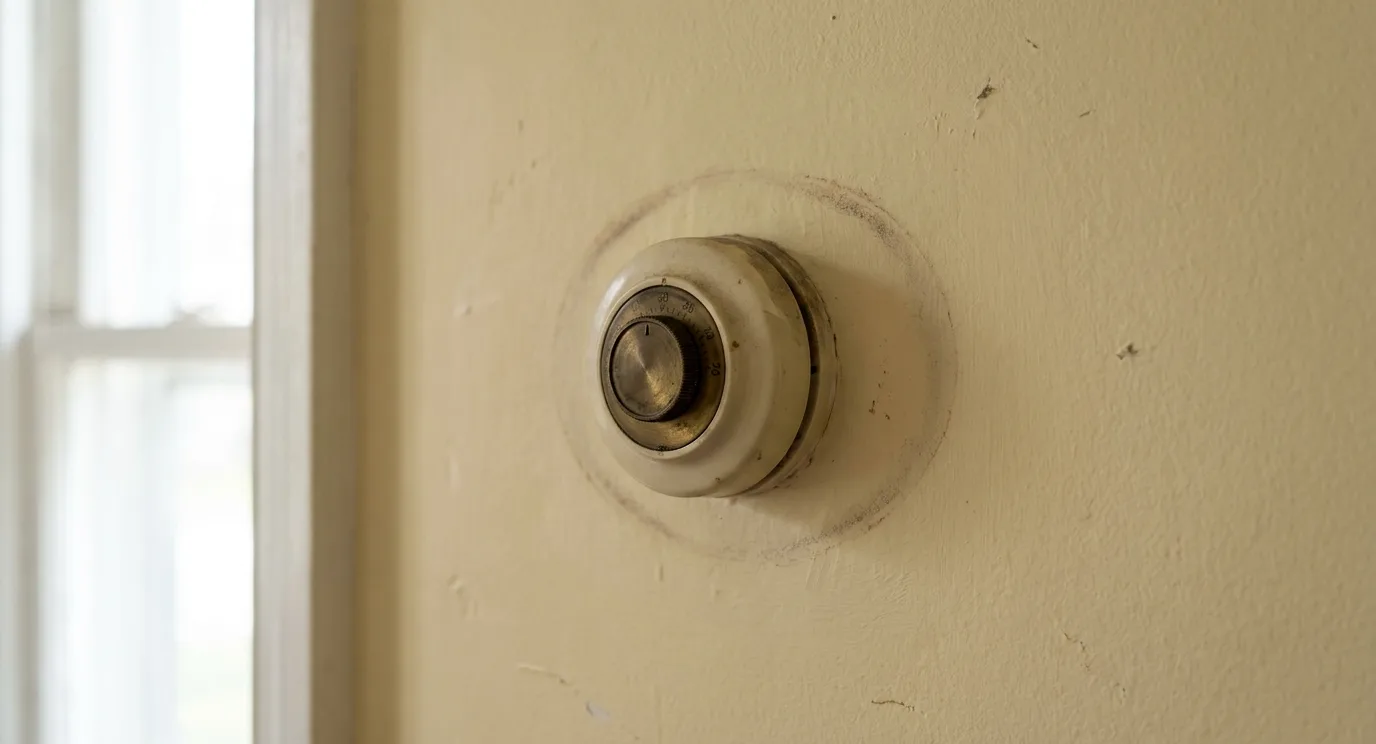
Wiring that has worked loose over years of heating and cooling cycles often breaks contact and stops sending signals. Dust and pet hair can coat the sensor so it reads the wrong temperature. In older mercury models the glass vial can tilt or leak fluid after the unit is bumped during cleaning.
Power surges from storms sometimes damage the circuit board inside digital thermostats. Low batteries cause the display to fade and stop sending reliable commands to the equipment even when the wiring remains intact.
Repair and Replacement Choices Available
When a wire has simply come loose our technicians tighten the terminal screws and test the system again. If the sensor is off they recalibrate the unit when the model allows it. For units with cracked bases or leaking mercury they remove the old thermostat and install a new digital model that uses the existing wires.
Home HVAC Systems carries both basic non programmable thermostats and models with simple scheduling. The new unit mounts on the same base plate in most homes so no extra holes are needed in the wall.
What Homeowners Can Check First
Before calling, open the thermostat cover and look for any loose wires or visible dust. Gently brush away loose debris with a soft brush while the power to the system is off at the breaker. Replace the batteries if the unit uses them and wait a few minutes to see whether the display returns and the equipment responds.
Write down the exact settings you use and note whether the problem happens only in heat mode, cool mode, or both. This information helps our technicians decide which tests to run first once they arrive.
Thermostat Repair questions
How do I know if the thermostat or the furnace is the real problem?
Our technicians test the thermostat first by checking whether it sends voltage to the furnace wires when the temperature is raised. If voltage reaches the equipment but the furnace stays silent, the issue lies elsewhere. This step prevents unnecessary work on the larger unit.
Can a new thermostat work with my older furnace?
Most modern thermostats connect to the same low voltage wires already in the wall. Our technicians verify wire labels and colors before installing so the new unit calls for heat and cool at the correct times without any rewiring inside the furnace cabinet.
What parts might need to be replaced during the visit?
Common replacements include the thermostat base plate, wire nuts, or the entire wall unit itself. Technicians carry these parts so most repairs finish in one trip without a second visit to pick up materials.
Will the new thermostat need programming after installation?
Basic models require only setting the time and temperature. Programmable versions let you choose daily schedules. Our technicians walk through the buttons so you can adjust the program once the system is running again.
Schedule Thermostat Repair Today
Home HVAC Systems restores accurate temperature control so your home stays comfortable through changing weather.