
Refrigerant Leak Repair in the USA
Home HVAC Systems sends technicians to find and stop refrigerant leaks that keep air from cooling or heating properly. Refrigerant moves through coils and lines carrying heat away from the house in summer and pulling warmth inside during winter. When a leak drops the charge the compressor works harder and indoor temperatures swing out of range. Our crews use gauges and electronic detectors to locate the exact spot without guessing.
A low refrigerant level often starts from vibration loosening fittings or from moisture causing corrosion on copper tubing. Technicians record low side and high side readings first, then test the entire circuit for drops. Once the leak is found they can repair the joint replace a section of line or change a coil depending on the damage. The system is then evacuated and recharged to factory specifications so it runs at the right capacity again. When summer heat or winter cold strikes the USA Home HVAC Systems assists with refrigerant leak repair needs immediately.
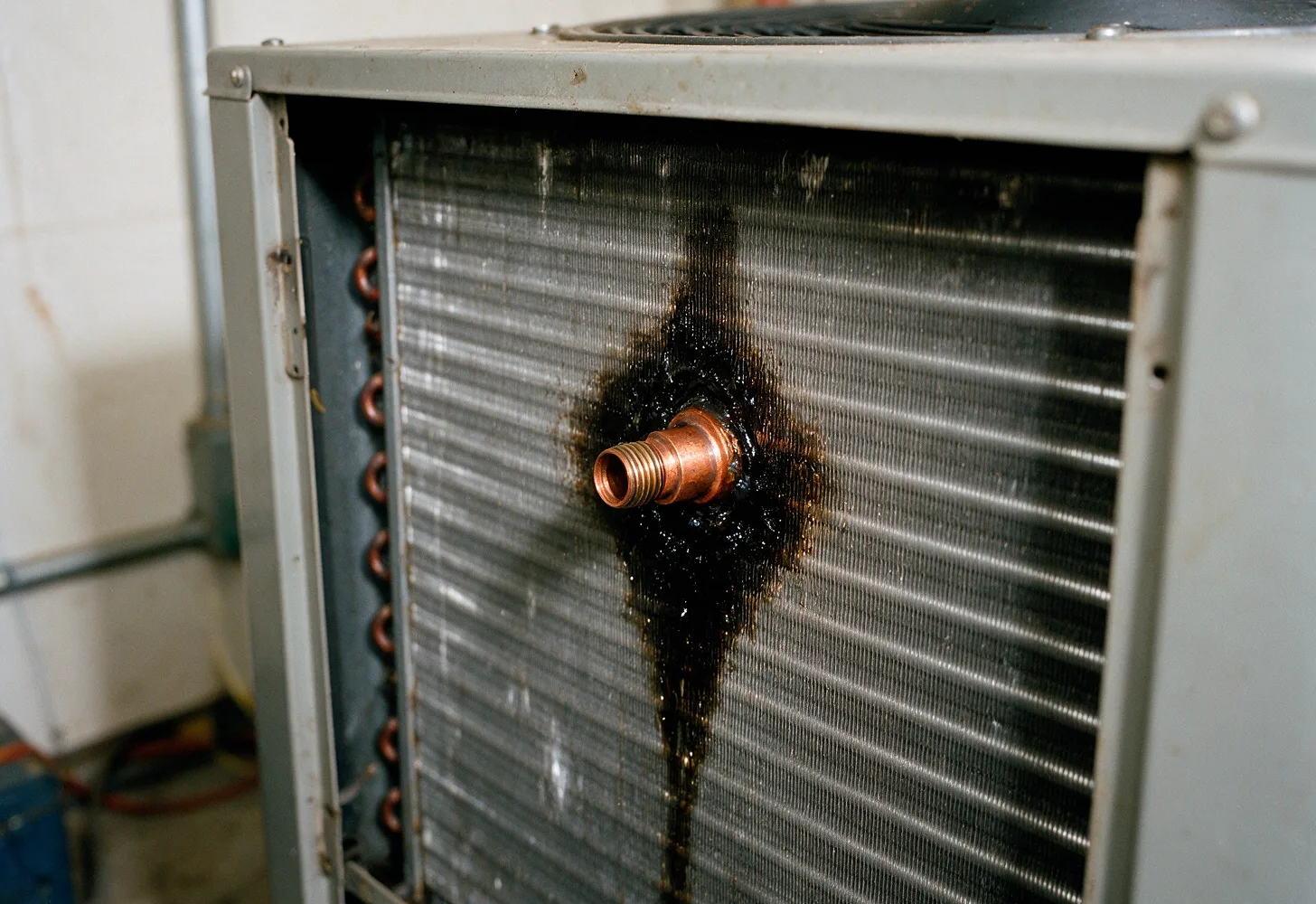
Warning Signs of Refrigerant Loss
- Hissing sounds near the outdoor condenser unit during operation
- Ice forming on the indoor evaporator coil or suction line
- Air from vents feels warm even when cooling mode is selected
- Electric bills rising without changes in thermostat settings
- System running longer cycles without reaching set temperature
What Causes Refrigerant Leaks
Vibration from the compressor and fan motors loosens flare nuts and brazed joints over time. Copper lines also rub against ductwork or framing and wear small holes. Moisture inside the system reacts with refrigerant and oil to form acids that eat through metal at valves and coils.
Outdoor units near salt air or harsh lawn chemicals see faster corrosion on the condenser coil fins and headers. Age alone weakens solder joints and Schrader valve cores. Technicians note these patterns when they open the service panel and inspect the condition of the copper.
How Technicians Locate and Repair Leaks
Our technicians connect manifold gauges to read pressures and temperatures then compare them against the outdoor temperature. Electronic leak detectors sniff along every joint while a soap solution shows bubbles at active leaks. Ultraviolet dye can be added for hard-to-reach spots inside walls or attics.
Small pinholes in coils are often repaired by cutting out the damaged section and brazing in new tubing. Larger damage on the evaporator or condenser usually requires replacing the entire coil. After the repair the circuit is pressure tested with nitrogen then pulled into a deep vacuum before the correct refrigerant charge is weighed back in.
Parts and Materials Used in the Repair
Repairs use the same type of copper tubing and fittings already in the system so expansion rates match. Brazing rod with silver content creates strong leak-proof joints. New filter driers are installed to capture any moisture or debris stirred up during the work.
Schrader valve cores are replaced as a standard step because they harden and seep over years. When a full coil change is needed the new coil carries the correct circuit design for the existing outdoor unit. All connections receive new insulation to prevent sweating and energy loss.
What Homeowners Can Do Before Help Arrives
Turn the thermostat to off so the compressor stops running on low refrigerant and avoid further wear. Change or clean the indoor air filter because a dirty filter makes the coil colder and can hide the real problem. Note any unusual noises or ice you see and share those details when the technician calls.
Rake leaves and trim plants back from the outdoor unit so the condenser can release heat. Do not attempt to add refrigerant yourself because the system must be leak-free and properly evacuated first. These simple steps help the crew work faster once they reach the house.
Refrigerant Leak Repair questions
Is a refrigerant leak dangerous inside the home?
Small leaks release refrigerant slowly and the vapor is heavier than air so it usually stays near the unit. Our technicians always ventilate the space and use proper recovery equipment. They also check for combustion products if the leak is near a furnace.
Can the leak be fixed without replacing the whole system?
Many leaks occur at accessible fittings or short line sections and can be repaired on site. When the evaporator or condenser coil has multiple leaks replacement of that coil is the reliable fix. Home HVAC Systems evaluates the full system age and condition before recommending options.
Why does the system need a vacuum after the leak is fixed?
Moisture and air left in the lines create acids and reduce cooling capacity. A deep vacuum removes those contaminants before the correct refrigerant weight is added. This step protects the compressor and keeps the system running at design performance.
How often should refrigerant levels be checked?
A properly sealed system holds its charge for years. Technicians check pressures during routine service or when cooling performance drops. If levels are low they locate and repair the leak rather than adding refrigerant repeatedly.
Refrigerant Leak Repair
Contact Home HVAC Systems to schedule a pressure test and leak search for your home comfort system.