Furnace Repair in the USA
Home HVAC Systems sends technicians to homes across the USA when furnaces stop producing heat. We focus on the parts that matter most for safety and performance such as the heat exchanger, gas valve and blower assembly. A cracked exchanger or weak flame sensor often explains why the system shuts down before the house reaches the set temperature.
Our approach starts with measuring gas pressure, checking the limit switches and testing the draft inducer motor. These readings tell us whether the furnace can run safely or needs new components. Homeowners notice the difference once airflow and combustion return to normal levels. Our technicians handle furnace repair so that families throughout the USA stay comfortable with help from Home HVAC Systems.
Warning Signs That Point to Furnace Trouble
- Furnace runs but the air coming from vents stays cool
- Short cycling that turns the unit on and off every few minutes
- Rattling or banging sounds that start when the burner lights
- Yellow flame instead of the steady blue color you expect
- Musty or burning smell that lingers after the system starts
Common Causes Behind Furnace Failures
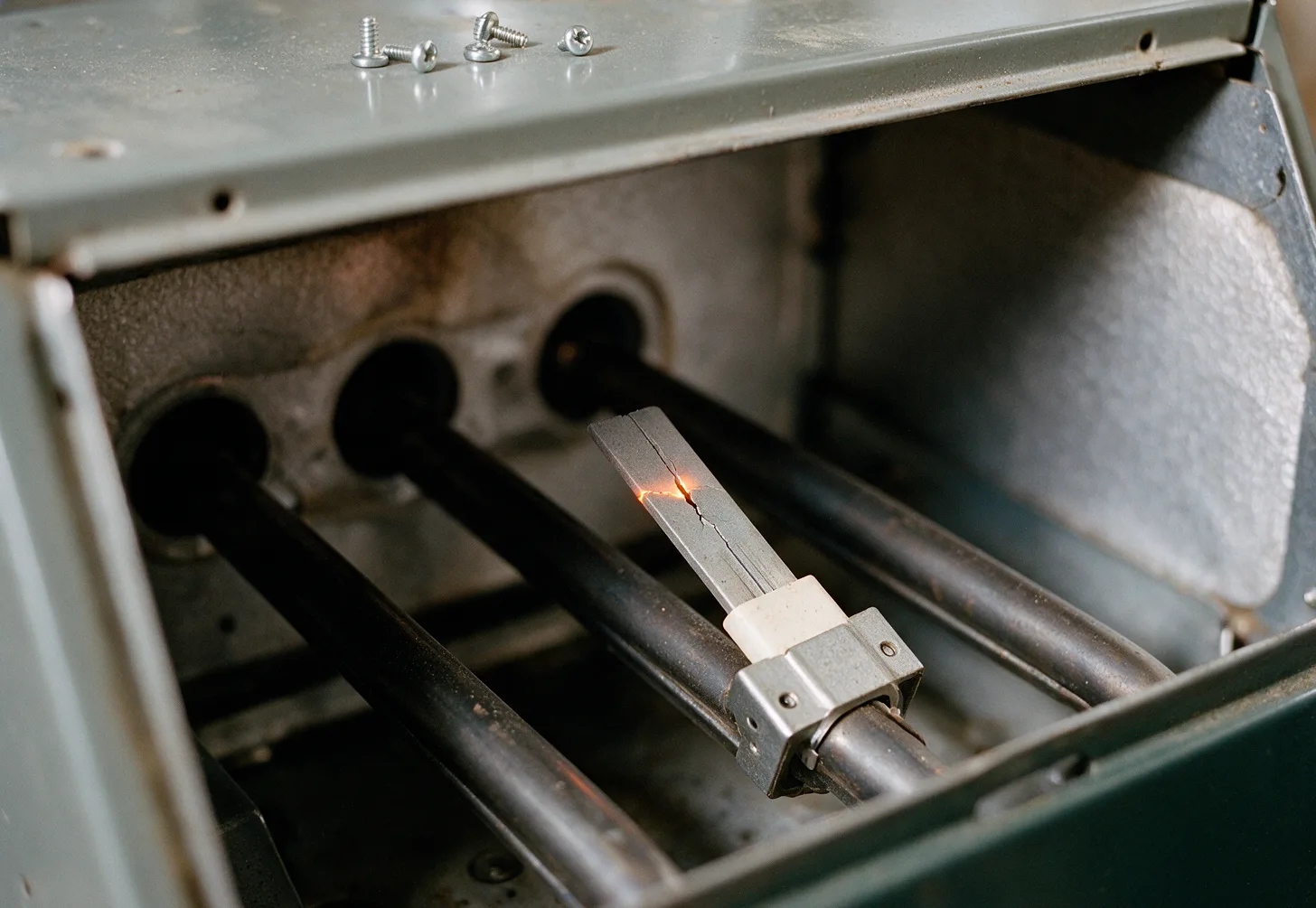
A dirty filter restricts airflow and causes the heat exchanger to overheat until the safety switch trips. Technicians see this pattern often when homeowners forget to change the filter every few months. Another frequent cause is a worn igniter that no longer creates the spark needed to light the burners.
Corrosion inside the condensate drain line can back up water and trigger a shutdown. Low gas pressure from a partially closed valve also prevents the furnace from reaching full output. Each of these issues shows up during a standard diagnostic visit.
What Technicians Inspect and Measure on Site
We begin by checking the thermostat calibration and confirming the temperature rise across the heat exchanger. Next we measure the amperage draw on the blower motor and test the capacitor for proper microfarad readings. A weak capacitor often explains why the fan starts slowly or hums without turning.
Our technicians also examine the flame sensor for carbon buildup and clean it when needed. They verify the pressure switch closes at the correct draft level and listen to the inducer motor for bearing noise. These steps help identify parts that are close to failure before they strand the household in cold weather.
Repair Choices and Replacement Parts
Many furnaces can be brought back online with a new igniter, flame sensor or limit switch. When the heat exchanger shows cracks we discuss replacement of the furnace because repairs there are not safe. Home HVAC Systems carries common components such as pressure switches and blower wheels on the truck for same-visit fixes.
We also carry universal blower motors that fit most residential models and OEM-style gas valves for units that still have years of service left. Every part we install is matched to the furnace model so the new component works with the existing control board and wiring.
What Homeowners Can Check Before Help Arrives
Start at the wall control and make sure heating mode is selected with the fan left on its automatic setting. Swap out a dusty, clogged filter, since choked airflow is the most common reason for no-heat calls. Make sure the furnace switch near the unit is in the on position and the circuit breaker has not tripped.
Listen for the inducer motor when the thermostat calls for heat. If it does not start, note the sound and any error lights on the control board. These details help our technicians bring the correct parts and shorten the time the house stays without heat.
Furnace Repair questions
Why does my furnace blow cold air even when the burner is lit?
The heat exchanger may be cracked or the blower may be running on the wrong speed. Low gas pressure or a failing limit switch can also prevent the air from warming before it leaves the vents. A technician measures temperature rise and gas pressure to find the exact cause.
How often should the furnace filter be changed?
Most homes need a new filter every sixty to ninety days. Homes with pets or high dust levels may need changes every thirty days. A clean filter keeps airflow steady and protects the heat exchanger from overheating.
What does a yellow burner flame mean?
Yellow flames usually signal incomplete combustion caused by a dirty burner or low air supply. This condition can produce carbon monoxide. Our technicians clean the burners and check the combustion air intake to restore a clean blue flame.
Can a cracked heat exchanger be repaired?
No safe repair exists for a cracked heat exchanger. The part must be replaced and that usually means installing a new furnace. Home HVAC Systems explains the safety reasons and shows the homeowner the crack during the visit.
Book Furnace Repair With Home HVAC Systems
Contact Home HVAC Systems when your furnace stops heating. Our technicians arrive with parts to restore warmth across the USA.