
Boiler Repair in the USA
Home HVAC Systems works on boiler systems that supply hot water or steam to radiators throughout a house. These units rely on a burner, heat exchanger, circulating pump, and controls to move heat where it is needed. When cold weather arrives, any disruption in this loop quickly leaves rooms chilly. Our technicians approach each call by first confirming the thermostat setting and power supply so they can focus on the mechanical side of the problem.
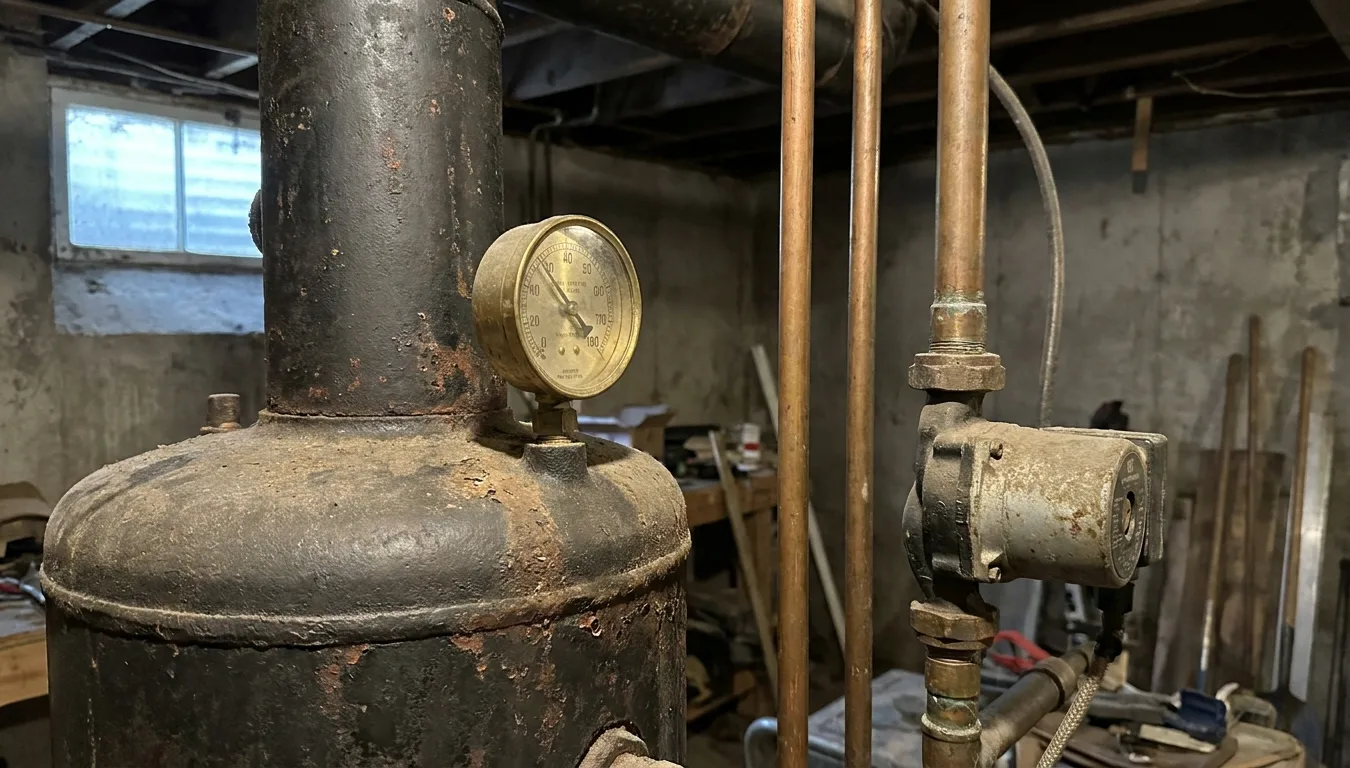
A boiler that short cycles or shows low water pressure often points to trapped air, a worn circulator, or mineral scale inside the heat exchanger. Home HVAC Systems carries replacement gaskets, relief valves, and pump motors on service vehicles to address the most frequent failures without delay. Homeowners can note the pressure reading on the gauge and listen for banging sounds before the technician arrives, which helps narrow the diagnosis. Home HVAC Systems supports every household needing boiler repair by keeping indoor air right throughout the USA.
Common Warning Signs
- Radiators stay cold while the boiler runs
- Pressure gauge reads below the normal range
- Loud banging or gurgling from the pipes
- Water appears around the boiler base
- Pilot light fails to stay lit
What Technicians Measure First
Our technicians begin by recording the boiler pressure and temperature at the supply and return lines. They also test the aquastat settings and check combustion air openings to confirm safe operation. These readings reveal whether the unit is running at the designed output or if scale is reducing heat transfer.
Next they examine the expansion tank for proper air charge and look at the condition of the circulator motor bearings. A failing pump often shows itself through higher amp draw or vibration. Recording these values allows the technician to decide whether a simple adjustment or part replacement will restore flow.
Frequent Causes of Boiler Shutdowns
Sediment that settles at the bottom of the boiler reduces water volume and overheats the metal. Over time this leads to cracks in the heat exchanger or frequent relief valve discharge. Home HVAC Systems flushes the system and installs a magnetic filter when repeated draining is needed.
Corroded zone valves or stuck float switches can prevent the burner from firing even when heat is called for. Technicians replace these components with new brass or stainless models sized for the existing piping. They also verify that the low-water cutoff is functioning so the boiler cannot run dry.
Repair Choices and Parts Used
Minor leaks at threaded fittings are often corrected with new gaskets and thread sealant rated for hot water. When the relief valve drips steadily, the entire valve is swapped for one matched to the boiler pressure rating. Home HVAC Systems stocks common sizes so most repairs finish in one visit.
For older units showing repeated ignition failure, the technician may recommend replacing the gas valve or ignition assembly. If the heat exchanger has developed a crack, the discussion turns to a full system replacement rather than repeated patching. In every case the homeowner receives a clear explanation of the options before work begins.
Steps Before the Technician Arrives
Homeowners can safely confirm that the main power switch is on and the thermostat is set above room temperature. Checking that the boiler pressure sits between 12 and 15 psi when cold prevents unnecessary emergency calls for a simple fill-valve adjustment. Any visible water on the floor should be noted but not wiped up until the technician sees the source.
It is helpful to write down the sequence of events, such as when the banging started or how often the unit shuts off. This information guides the inspection toward the circulator, air vents, or controls without extra steps. Home HVAC Systems then proceeds directly to the measurements that confirm the cause.
Boiler Repair questions
Why does my boiler pressure keep dropping?
A gradual loss of pressure usually means a small leak at a valve or an automatic air vent that is stuck open. Our technicians pressure-test the entire loop to locate the source and replace the faulty part so the system holds its charge.
Can I add water to the boiler myself?
You can open the fill valve slowly while watching the gauge, but only if the unit is cold and pressure is below 10 psi. Repeated refilling washes away corrosion inhibitors, so Home HVAC Systems checks the water chemistry and installs a filter to reduce future loss.
What does a banging sound mean in the pipes?
Banging often comes from steam bubbles collapsing in water that has not circulated properly. Air trapped in the lines or a failing circulator pump creates the condition. Technicians purge the air and test pump operation to stop the noise.
When should a boiler be replaced instead of repaired?
If the heat exchanger shows cracks or the unit requires frequent part changes, replacement becomes the practical choice. Home HVAC Systems measures the existing radiation load and recommends a new boiler sized for the house to restore even heat.
Schedule Boiler Repair
Contact Home HVAC Systems to restore steady heat when your boiler shows pressure loss or unusual sounds.